Google's New Real Estate Ad Testing Crushes Zillow Stock
Zillow shares plunged over 9% after Google began testing home listing features directly in search results. Here's what happened and why analysts are worried about the long-term impact on real estate portals.

Google Wants to Sell You a House Now, Apparently
Just when Zillow thought it had the online real estate game figured out, Google decided to crash the party. On Monday, December 15, 2025, Zillow shares took a nosedive of over 9% after reports emerged that the tech giant is testing real estate listings directly in its search results. Because why would Google stop at knowing everything about your browsing habits when it could also know where you want to live?
The testing was first spotted by real estate tech strategist Mike DelPrete, who shared screenshots showing full property listings appearing right in Google Search results. These listings include property details, the ability to request a tour, and options to contact an agent. Sound familiar? That's basically Zillow's entire business model served up on a Google platter.
What Exactly Is Google Testing?
Google's new real estate experiment is currently limited to mobile devices and select markets, but it packs a punch. Here's what users are seeing in these test markets:
- Full property detail pages with photos, prices, and addresses
- Filters for bedrooms, bathrooms, square footage, and price
- A "Request a tour" button with promises of agent responses within 15 minutes
- Links to contact "top-rated" local agents
The feature is powered in partnership with real estate analytics firm ComeHome, which pulls listings from the Multiple Listing Service rather than directly from listing agents. In other words, Google found a way to become a real estate portal without actually becoming a real estate company. Classic Google move.
The Stock Market Reaction Was Swift and Brutal
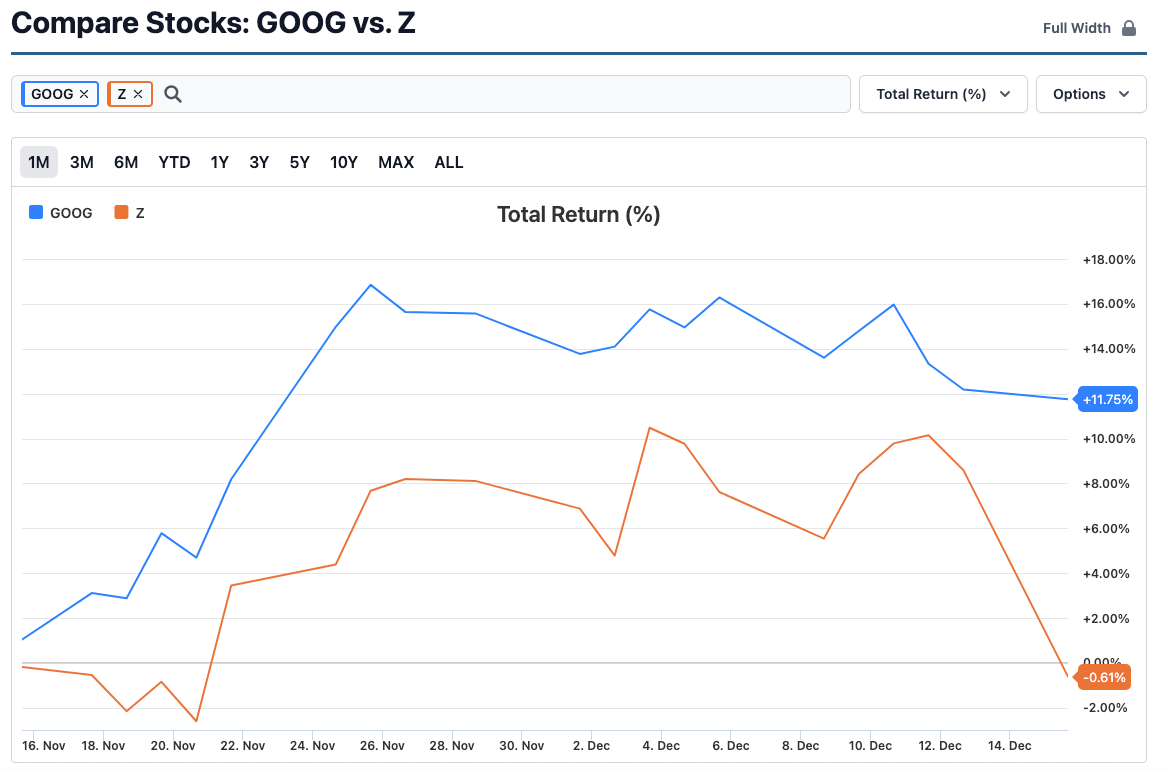
Investors didn't waste any time hitting the sell button. Zillow lost approximately $1.6 billion in market cap in a single day, with shares dropping more than 11% at their lowest point. The company's market cap now sits at around $16.26 billion, which is still a lot of money but significantly less than it was on Friday.
Zillow wasn't the only casualty. CoStar Group, which owns Homes.com, slid about 7.8% and was heading toward its lowest close since July 2022. Rocket Companies, which recently acquired Redfin, fell 4.7%. Meanwhile, Alphabet shares were basically unchanged, because when you're a $2 trillion company, disrupting yet another industry is just another Monday.
Wall Street Analysts: Divided but Not Panicking
The analyst community has weighed in, and opinions are mixed. Some see this as a potential long-term threat, while others think Zillow will weather the storm just fine.
The Cautious Optimists
Wells Fargo analyst Alec Brondolo, who holds an equal weight rating on Zillow, pointed out that the company isn't heavily dependent on organic search for its traffic. "The listings product appears similar to Google Hotel Metasearch results; introduction could increase traffic cost to Zillow, but disintermediation unlikely," Brondolo noted in a Monday report to clients. (Source: CNBC, https://www.cnbc.com)
The thinking here is that Google will likely treat real estate the same way it treats hotel searches, where companies like Zillow, Homes.com, and Realtor.com would bid for ad placements rather than Google trying to cut them out entirely.
The Long-Term Worriers
Goldman Sachs analyst Michael Ng sees things a bit differently. "While we don't expect a direct near-term impact on Zillow's business, given that most of Zillow's traffic is direct and Google's new product is currently limited to select markets and mobile browsers, we view this development as a long-term risk for real estate portals like Zillow," Ng wrote while maintaining a Neutral rating on the stock. (Source: Goldman Sachs via CNBC, https://www.cnbc.com)
Oppenheimer's Jason Helfstein added that Google's expansion could eventually impact the 228 million consumers visiting Zillow.com quarterly, though he noted "the impact would likely take years to play out."
Why This Matters for the Real Estate Industry
Let's break down why everyone from Wall Street to your local real estate agent should be paying attention to this development:
| Factor | Current Reality | Potential Future Impact |
|---|---|---|
| Traffic Source | Most Zillow traffic is direct | Could shift if users start searches on Google |
| Lead Generation | Zillow's Premier Agent program dominates | Google could compete for buyer leads |
| Market Coverage | Google testing in limited markets | National rollout would change everything |
| Agent Relationships | Zillow has established agent network | Google partnering with ComeHome for agents |
The real concern here isn't what Google is doing today. It's what Google could do tomorrow. If the search giant decides to go all-in on real estate, it has the traffic, the technology, and the resources to become a serious competitor overnight.
The Silver Lining for Zillow
Before Zillow investors start updating their own Zillow listings to downsize, there are some reasons for optimism. First, Zillow's traffic is overwhelmingly direct, meaning people type Zillow.com into their browsers or use the app rather than searching "homes for sale" on Google. That's a sticky user base that won't disappear overnight.
Second, Google's test is extremely limited. It only works on mobile devices, in select markets, and not for all users. That's a far cry from a full-scale assault on the real estate portal industry.
Third, and perhaps most importantly, Google has a history of testing features that never make it to prime time. Remember Google Plus? Google Glass? Google Stadia? Just because Google is testing something doesn't mean it will become a permanent fixture.
Conclusions
Google's foray into real estate listings is undeniably significant, but it's not the death knell for Zillow that Monday's stock plunge might suggest. The testing is limited, the near-term impact is minimal, and Zillow has a strong direct traffic base that insulates it from immediate disruption.
That said, this is a clear warning shot. Google has demonstrated that it can enter the real estate space if it chooses to, and Zillow's investors are right to be concerned about what that might mean in the long run. The real estate portal industry, which has enjoyed relative stability in recent years, may be heading for a period of increased competition and uncertainty.
For now, Zillow remains the dominant player in online real estate, but the company would be wise to keep innovating and strengthening its direct relationships with consumers and agents. In the tech world, the only constant is change, and Google just reminded everyone that it can change things whenever it wants.
Frequently Asked Questions
Why did Zillow stock drop so much on December 15, 2025?
Zillow shares fell over 9% after reports emerged that Google is testing real estate listings directly in its search results. Investors worried that this could create new competition for Zillow's core business of connecting homebuyers with properties and agents.
Is Google competing directly with Zillow now?
Not exactly, at least not yet. Google is currently testing a real estate listing feature in limited markets and only on mobile devices. The feature allows users to view property details and request tours, similar to what Zillow offers, but it's still in the experimental phase.
How does Google's new real estate feature work?
When users search for homes in certain test markets, Google displays a carousel of property listings at the top of search results. Users can see photos, prices, and property details, and they can request tours or contact agents directly through the search results page.
Should I sell my Zillow stock?
That depends on your investment strategy and risk tolerance. Analysts are divided on the long-term impact of Google's move. Some see it as a significant threat, while others believe Zillow's strong direct traffic base will protect it from major disruption. Always consult with a financial advisor before making investment decisions.
What other real estate stocks were affected by this news?
CoStar Group, which owns Homes.com, dropped approximately 7.8%, while Rocket Companies, which acquired Redfin earlier in 2025, fell 4.7%. The news primarily impacted companies that operate real estate listing portals.
Will Google replace Zillow for home searches?
It's too early to say. Google's current test is very limited, and the company has a history of abandoning experimental features. However, if Google decides to fully commit to this space, its dominance in search could make it a formidable competitor to traditional real estate portals.